

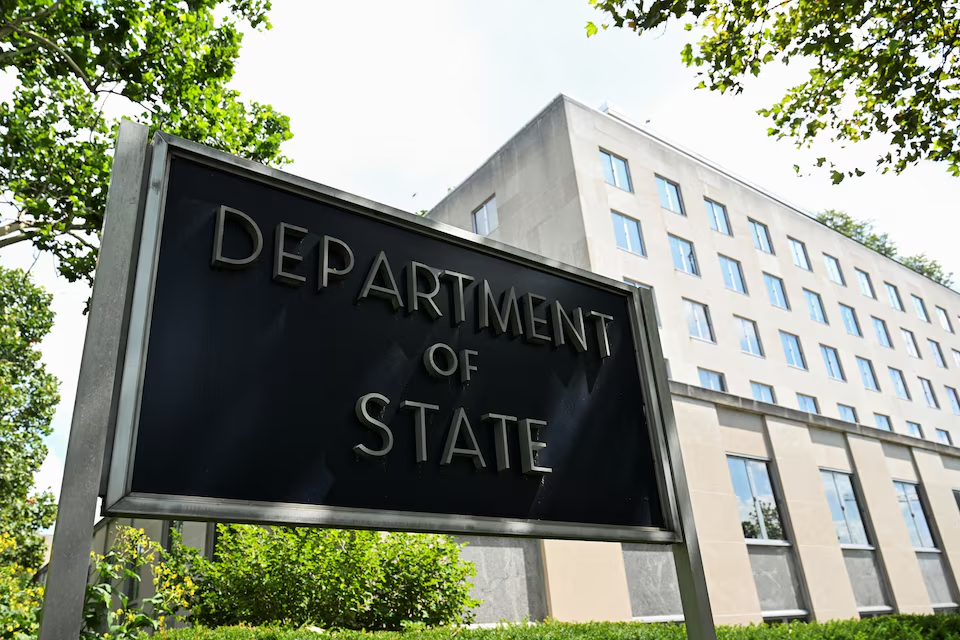
The United States has announced plans to impose visa restrictions on several senior Rwandan officials accused of contributing to instability in the eastern Democratic Republic of Congo (DRC), increasing diplomatic pressure on Kigali over its alleged support for the M23 rebel group.
According to a statement released on Friday, the U.S. government will suspend the issuance of visas to a number of high-ranking Rwandan officials over what Washington described as their role in destabilizing eastern Congo.
The decision was announced by U.S. Secretary of State Marco Rubio, who said the restrictions target individuals believed to be involved in actions that undermine peace and security in the region.
“The U.S. Department of State will implement visa restrictions on several senior Rwandan officials due to their involvement in destabilizing eastern DRC,” the statement said.
Washington said the move is based on allegations that certain Rwandan officials continue to support the M23 rebel movement and have failed to uphold commitments made under the Washington Agreement on Eastern Congo Security. U.S. authorities said such actions contribute to ongoing violence and threaten peace and stability in the Great Lakes region.
The announcement follows earlier sanctions imposed by the United States on members of the Rwanda Defence Force (RDF), including four senior officers accused of supporting M23 operations in eastern Congo.
The U.S. government also stressed that all parties to the Washington agreement must fulfil their commitments to help restore peace in the region.
Washington said the government of the Democratic Republic of the Congo must “immediately dismantle” the armed group FDLR and other affiliated militias. At the same time, it called on Rwanda to withdraw its troops and military equipment from Congolese territory.
According to the United States, implementing these measures is essential to achieving lasting peace and economic stability in the Great Lakes region.
The statement further warned that individuals found to be supporting or contributing to the disruption of peace efforts in the region could face additional diplomatic consequences.
Washington explained that the visa restrictions are based on Section 212(a)(3)(C) of the U.S. Immigration and Nationality Act, which authorizes the Secretary of State to deny entry to foreign nationals whose presence in the United States could have serious adverse foreign policy implications.
The restrictions may also apply to some family members of the affected officials.